
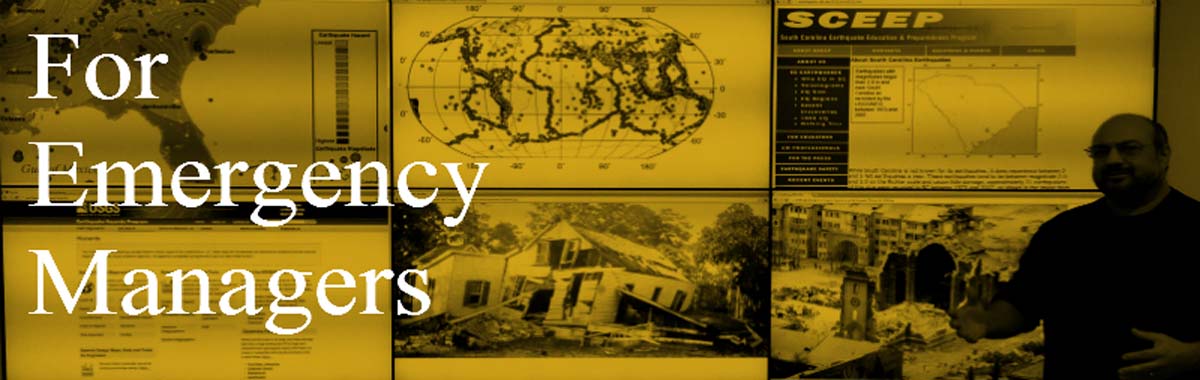

The South Carolina Earthquake Education and Preparedness (SCEEP) program has been a center for excellence for the state of South Carolina on earthquakes, earthquake education, and earthquake preparedness, since the spring of 2007. This program is designed to not only heighten awareness, but also promote earthquake safety among both the general public and county/local government officials through outreach, education, and research.
The South Carolina Earthquake Guide
This guide from the South Carolina Emergency Management Division provides everything you should know about earthquakes in South Carolina. Nearly all earthquakes cause little to no harm, but it only takes one to cause a disaster. Browse this guide to learn how you can become better prepared for the next one.

Workshops and Events
For Planners, Engineers, Emergency Management, Consultants, Responders or Educators
- 2020 NOAA SECART All Hazards WorkshopThe facility has room for 200 participants from professionals serving in agencies in the intended audience. To register your organization complete this registration form or contact Mike Proud at mike.proud@noaa.gov. ***** Include your name(s), agency affiliation and contact information. For more information https://www.weather.gov/cae/2020noaasecartworkshop